45 Liters to Gallons
45 liters equals 11.8877 US gallons or 9.8986 Imperial gallons.
If your measurement comes from the United States, use 11.8877 US gal. If it comes from a UK or older Imperial specification, use 9.8986 Imperial gal.
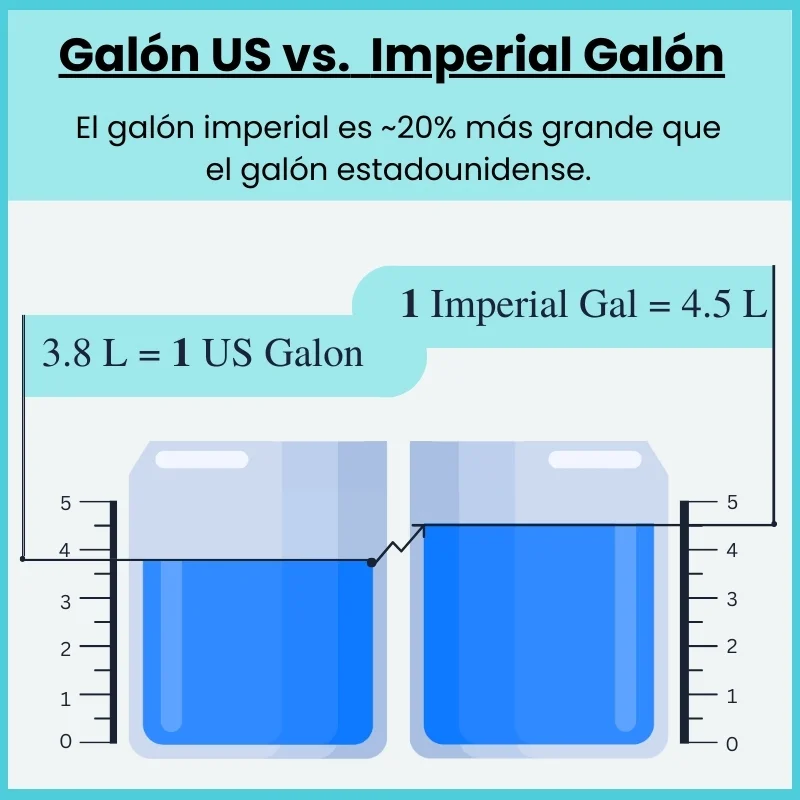
That distinction matters because US and Imperial gallons are different sizes.
How Many Gallons Is 45 Liters?
For US liquid gallons: 45 L = 11.8877 US gallons.
For UK Imperial gallons: 45 L = 9.8986 Imperial gallons.
The two results differ because 1 US gallon = 3.785411784 L and 1 Imperial gallon = 4.54609 L. NIST publishes the US and Imperial gallon as separate volume units.
How to Convert 45 Liters to US Gallons
Use: US gallons = liters ÷ 3.785411784.For this page: 45 ÷ 3.785411784 = 11.8877 US gal.You can also use 45 × 0.264172052 = 11.8877 US gal.Which method should I use? Both give the same answer. For quick calculations use L × 0.264172; for higher precision use L ÷ 3.785411784.
How to Convert 45 Liters to UK Gallons
Use: Imperial gallons = liters ÷ 4.54609.For this volume: 45 ÷ 4.54609 = 9.8986 Imperial gal.Or: 45 × 0.219969248 = 9.8986 Imperial gal.This result should not be mixed with the US result.
US Gallon vs Imperial Gallon for 45 Liters
The correct answer depends on which gallon the source means. If a US product simply says “gallon,” normally use the US liquid gallon. Do not assume a gallon is always 3.785 L. The Imperial gallon contains 4.54609 L.
An Imperial gallon is approximately 20.1% larger than a US liquid gallon.
What Does 45 Liters Look Like in Real Life?
A 45 L tank is a common automotive fuel capacity and converting it helps compare vehicle specifications between metric and US markets.
Liters vs Gallons: The Difference in One Sentence
A liter is one fixed metric volume; a gallon has different US and Imperial definitions.
The liter equals exactly 1 cubic decimeter. NIST lists 1 L as exactly 1 dm³ and 1000 mL.
For liquid-volume conversion: 1 L = 0.264172 US gal and 1 L = 0.219969 Imperial gal.
Does the Type of Liquid Change the Conversion?
No. Liters and gallons both measure volume so the conversion factor does not change with the liquid.
45 liters occupies the same volume whether it contains water, gasoline, milk, oil or paint. What changes with the liquid is mass or weight, not volume.
When Does 45 L to Gallons Matter?
Use the conversion when a metric capacity must be compared with a gallon-based specification.
Typical cases are:
Vehicles
Metric fuel tanks are normally listed in liters while US specifications may use gallons.
Water tanks and aquariums
Imported tanks may advertise the same capacity in liters or US gallons.
Paint and chemicals
Packaging can change between metric and US-market sizes.
Industrial storage
Drums and tanks often require liters and gallons on the same technical or shipping documents.
Accuracy, Precision and Rounding
The conversion factors used on this page are defined values: 1 US liquid gallon = 3.785411784 L and 1 Imperial gallon = 4.54609 L. The displayed gallon result may be rounded according to the selected precision.
Keep additional decimal places during intermediate calculations and round only the final result. Two or three decimal places are normally sufficient for everyday capacity comparisons. Technical specifications, calibration work and regulated documents may require more precision or a tolerance stated by the original source.
Common Liters-to-Gallons Conversion Mistakes
Mixing gallon standards: US liquid, Imperial and US dry gallons have different volumes.
Using the factor in the wrong direction: to convert liters to US gallons, divide by 3.785411784 or multiply by 0.264172052. Multiplying liters by 3.785411784 converts in the opposite direction.
Rounding too early: retain the full calculated value until the final step.
Treating volume as weight: liters and gallons measure volume. Converting the contents to kilograms or pounds requires the liquid’s density.
Unit Symbols and Volume Terminology
L means liter, mL means milliliter, US gal identifies the US liquid gallon, Imp gal identifies the Imperial gallon and dry gal identifies the US dry gallon. One liter contains exactly 1,000 milliliters.
If a specification uses only “gal,” check its country and context before converting. US fuel, paint and liquid-container specifications normally use the US liquid gallon. UK or explicitly Imperial specifications use the Imperial gallon. The US dry gallon is a separate dry-volume unit and should not replace either liquid gallon.
| Common Liters to Gallons Conversions | |
|---|---|
| Liters | US Gallons |
| 1 L | 0.2642 gal |
| 5 L | 1.3209 gal |
| 10 L | 2.6417 gal |
| 20 L | 5.2834 gal |
| 30 L | 7.9252 gal |
| 50 L | 13.2086 gal |
| 100 L | 26.4172 gal |
| 200 L | 52.8344 gal |
| 500 L | 132.086 gal |
| 1000 L | 264.1721 gal |
Reverse the Conversion
Need to go back?
US liters = gallons × 3.785411784
Imperial liters = gallons × 4.54609
Convert gallons to liters → homepage
See the full gallons-to-liters table →